
What is Zone 0?
Zone 0 is the first five feet around your home. It's where flying embers are most likely to start a fire during a wildfire, which is why California is creating new rules for it. Here's what it means for you.
Last reviewed October 7, 2026
Where things stand: Approved by the state, not in effect yet
California's Board of Forestry approved statewide Zone 0 rules on August 19, 2026. Before they take effect, they still have to clear a final legal review and be filed with the Secretary of State.
In September 2026, the Board pulled the rules back from that review to make technical fixes. There's no effective date yet, so no statewide Zone 0 deadline is running today.
Some cities, including the City of San Diego, already enforce their own Zone 0 rules, and existing defensible space rules already apply in many high fire hazard areas. We'll tell you what applies at your address.
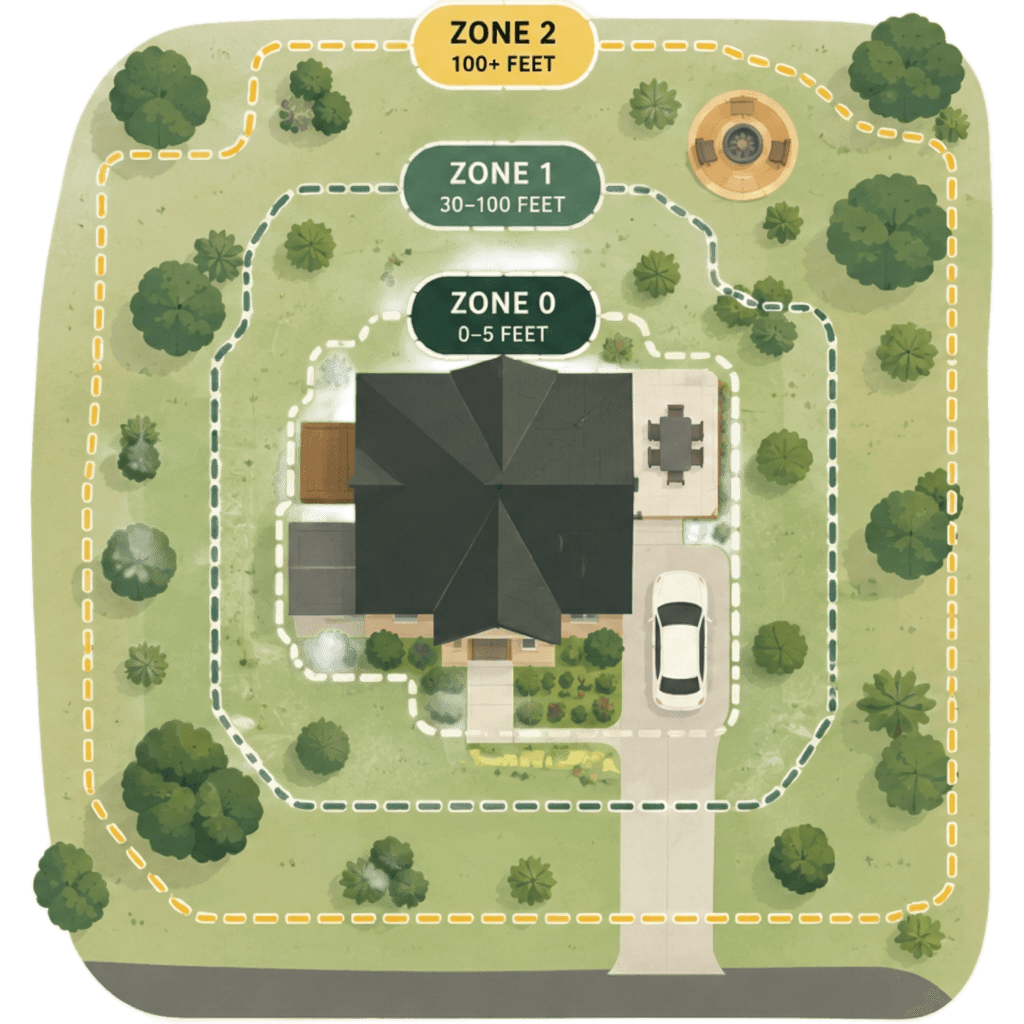
The three defensible space zones
- Zone 0 (0–5 ft): Ember-resistant zone
- The five feet closest to your home, deck, and attached structures. The goal is to keep anything that can catch an ember away from the walls.
- Zone 1 (5–30 ft): Lean, clean, and green
- Keep this area free of dead plants and debris, and maintain spacing between trees and shrubs so fire can't jump between them.
- Zone 2 (30–100 ft): Reduced fuel zone
- Thin out vegetation and remove dead material so the fire intensity diminishes before it reaches your home.
Inside Zone 0: two parts
The safety zone
The strip right against your walls. Under the approved rules, it's plant-free and extends at least a foot from the house, or out to the edge of your eaves if they're wider.
The rest of the five feet
Beyond the safety zone, some healthy, well-maintained plants can stay, as long as they're spaced and trimmed properly and nothing combustible is on the ground.
What has to go
- Bark mulch, wood chips, and other combustible ground cover
- Dead and dying plants, leaves, and pine needles
- Firewood and other stored combustible materials
- Leaves and debris on the roof and in gutters
- Dead or dying branches, especially over the roof
What can often stay
- Healthy, well-maintained plants outside the safety zone
- Existing trees that are trimmed to the required clearances
- Gravel, pavers, concrete, and other non-combustible surfaces
When the rules kick in
Every deadline counts forward from the date the rules take effect, which hasn't been set yet.
- 1
New construction
Must meet Zone 0 standards as soon as the rules take effect.
- 2
Existing homes, first 3 years
Remove firewood, dead leaves, branches, mulch, and wood chips within five feet. Clean gutters, remove dead plants, and trim trees.
- 3
Existing homes, within 5 years
Create the plant-free safety zone under the eaves, replace combustible gates, and adjust attached sheds and fencing. Your local fire authority sets the exact timeline.
 Open the map Map: CAL FIRE
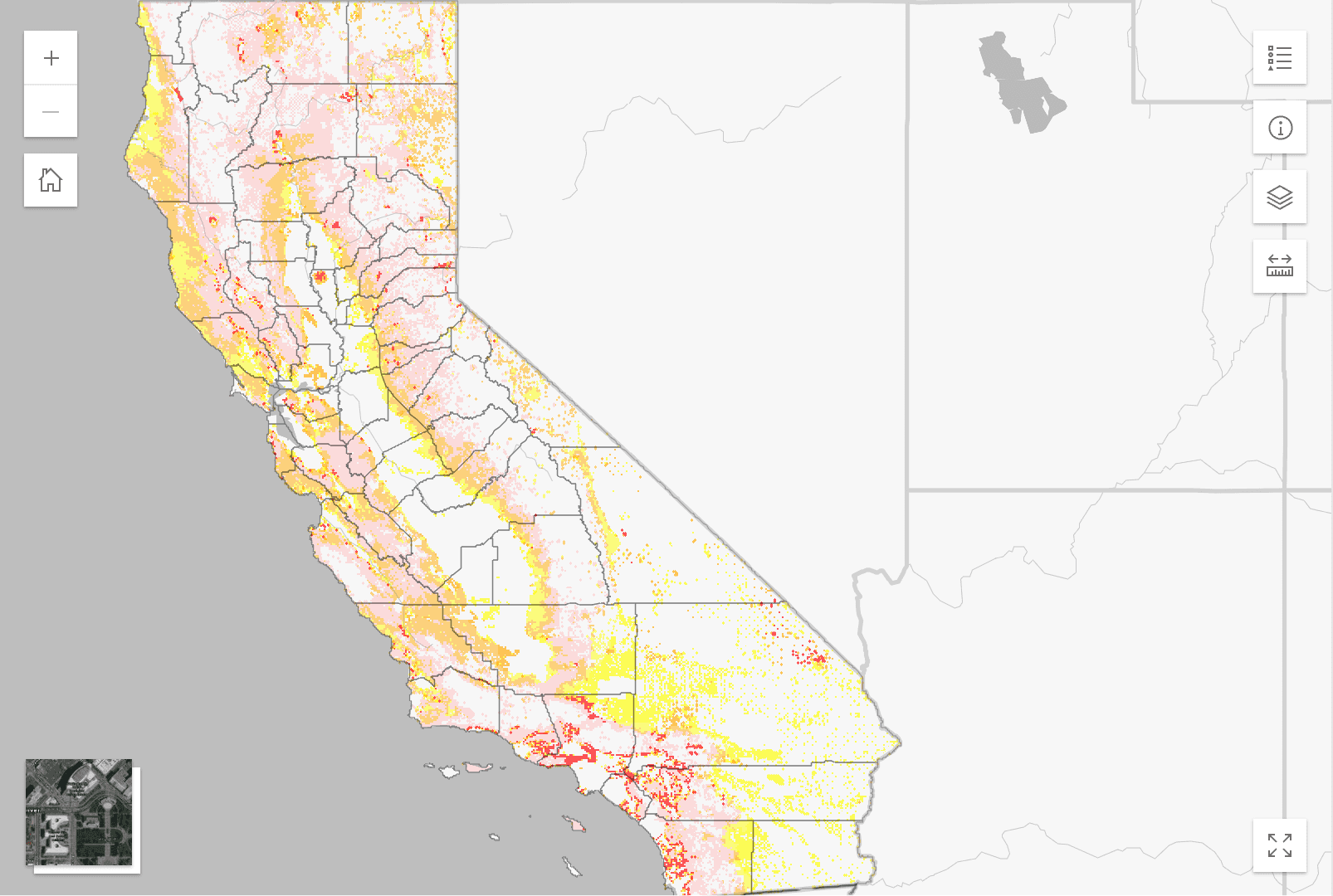
Find your fire hazard zone
The statewide Zone 0 rules apply to homes in State Responsibility Areas and in Very High Fire Hazard Severity Zones within cities. Enter your address on CAL FIRE's map to see which applies to you.
Check your addressOpens CAL FIRE's official map in a new tab.
Does Zone 0 apply to my home?
Once the statewide rules take effect, they apply to:
- Homes in State Responsibility Areas, which are mostly unincorporated and wildland areas where CAL FIRE is responsible
- Homes in Very High Fire Hazard Severity Zones within cities and other local responsibility areas
Not sure which applies to you? That's one of the first things we check during a free assessment.
Get ahead of the rules
Robert spent 28+ years with the Torrance Fire Department, including as Fire Marshal, and he's an ISA Certified Arborist. He'll walk your property, explain what matters most, and quote the clearing and haul-away, so you're ready whenever the rules take effect.
Zone 0 questions
Is Zone 0 the law right now?
Not statewide yet. The state approved the rules in August 2026, but they still have to clear a final legal review before taking effect. Some cities, including San Diego, already have their own Zone 0 rules.
Do I have to remove all the plants around my house?
No. The plant-free safety zone is the strip right against your walls. Beyond that, healthy, well-maintained plants can often stay if they're properly spaced and trimmed.
Can I keep my trees?
In most cases, yes. Existing trees can usually stay if they're healthy and trimmed to keep branches away from the roof and walls. As an ISA Certified Arborist, Robert can tell you what each tree needs.
How long do I have to comply?
Once the rules take effect, new construction must comply right away. Existing homes get a phase-in period: about three years for basic clearing and up to five years for bigger changes like gates and fencing.
Can you certify my home as Zone 0 compliant?
No one but your local fire authority or inspector can make that call. We help you meet Zone 0 standards, and we'll explain exactly what we did and why.
This page summarizes the Zone 0 rules approved by California's Board of Forestry and Fire Protection on August 19, 2026. It's general information, not legal advice, and the rules may change before they take effect. Your local fire authority decides what your property needs.